
Party
A License to
National fraternity groups and insurance companies have created a web of legal protection through unenforceable ‘guidelines’ and insurance. The people who pay for the insurance are often the same people who are sued -parents of undergraduates and their undergraduate sons- if they’re lucky.
April, 2020 Written & Photographed by: Claudia Montaner
On the other side of the stairs is a ‘theater’ with a larger projector screen and battered couches. Then near the center of the space is a gym with a hallway that leads to a dark room with a partially filled hot tub. The floor in the basement is sticky and the air smells moist with hints of dried beer. I am told if the party gets too big for the ‘Pub’ it spreads into the basement and then up another set of stairs near the kitchen. However, for most visitors, the house tour begins and ends in that basement.
The scene I described is almost mirrored in the 1979 movie “Animal House.'' Much of America perceives fraternities in the same manner, focused on drinking, hazing, and sex. In fact, one study by Niagara University found a direct correlation between college students' drinking habits and their exposure to ‘college drinking movies,’ as well as their presumed importance of drinking in college culture.
BOSTON- A tall brick building on the side of a busy street in Cambridge is marked on my GPS as my destination. The building is old, not the majestic kind of old that defines Boston, but college old. Walls poorly painted and peeling, the floors are worn out. This place looks as though it's from the 1800s, however, its charm is beaten out by generations of fraternity brothers living, learning, and partying here. I text Janak Agrawal, a Massachusetts Institute of Technology graduate student, that I’m here. Agrawal, an Indian international student, told me he joined his fraternity because “being an international student I was looking for friends and a place I can call home...but I wasn't too sure about joining one. Coming from a country where there are no fraternities I was definitely interested in exploring it and then I liked it, so joined greek life”
MEET THE BROTHERS

Since the late 1700’s fraternities have become home to students and an integral part of university life in the United States. They began as small, secretive debate clubs and grew into powerful exclusive national organizations, built on the pledge of lifelong bonds between brothers. According to the National Interfraternity Conference, approximately 10% of male college students are fraternity members today.


Describe your image
Today, this image continues to be perpetuated by film, television, and social media accounts like “Barstool Sports” and “Total Frat Move”. Despite this, fraternity culture is going through a reckoning, the current dialogue around sexual assault and hazing has been brought forward by highly publicized legal cases and activism.
The house I met Agrawal in is Alpha Delta Phi of MIT, founded in 1976 at MIT, but dating back to 1832. Just behind the front door is the central stairwell. To the left of the stairwell is a rec room with a pool table and a fireplace with a class of 2019-20 portrait and a kitchen operated by hired cooks. On the right of the stairwell is a dusty, and cluttered ‘library,’ filled with books left behind by past brothers.
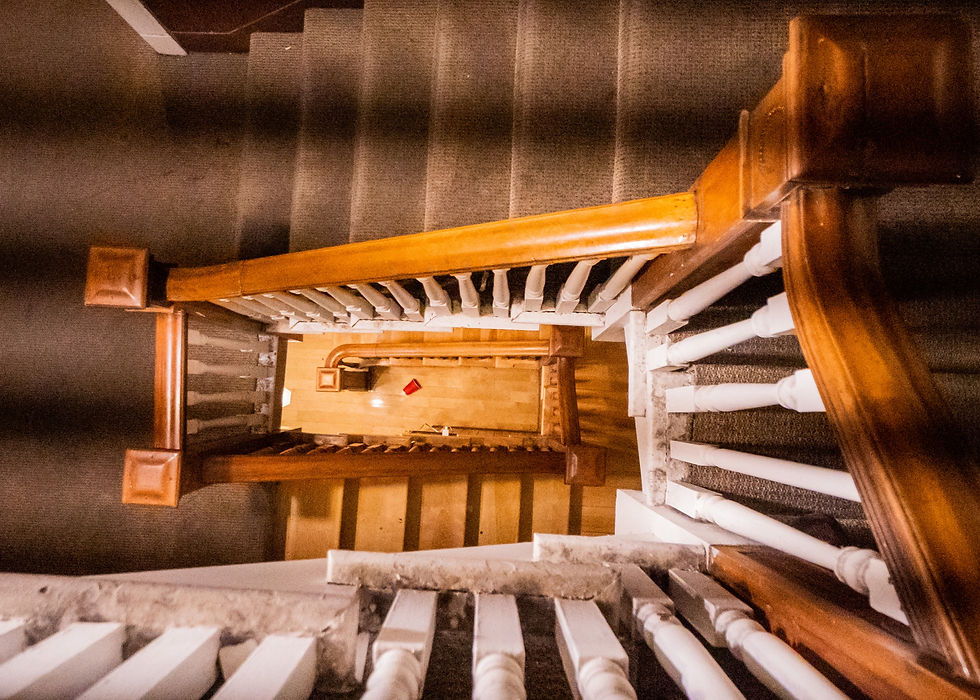
The stairwell in the center doesn't just divide the space horizontally, but vertically. If you were to go up you would see single person rooms, shared recreational space, old fraternity memorabilia and brothers playing video games. Go down the stairs, and you'll see a small room on the left as you enter the basement. This room holds a wooden bar, and is lit by LED lights that flash blue and red, while the walls are covered in stolen road signs. This room is aptly named the ‘Pub’.
MEET THE NUMBERS

The catalyst for a lot of the activism surrounding fraternities stems from the numbers. Schoalry articles have found that that 86% of off-campus attempted rapes or sexual assaults occur at fraternity houses, and that fraternity members are more likely than other college students to engage in rape.
Due to these liabilities, an intricate insurance system has been created to balance the legal battles of fraternities. David Easlick is a lawyer that has made a career out of being a witness in hazing trials, primarily represents plaintiffs in these cases, but he has also represented a national fraternity, and two individual defendants.
Photo Taken by Claudia Montaner
Alpha Delta Phi of MIT members show me the house and point to proof of past members.

Photo Taken by Claudia Montaner
Alpha Delta Phi of MIT brothers relax and play video games before the party starts.
Easlick has observed fraternities evolve, saying “It took a while to stop the, you know, out of control behavior out of “Animal House.” Basically, the fraternities had gone from the very unpopular, ' who cares type' of organizations after the Vietnam war and all of a sudden after “Animal House,” everybody was like “Oh wow how do I join that thing?”” In our conversation, he talked about the impact of the rise of lawsuits against fraternities.
“[The Insurance companies] originally had it set up so that everybody was covered, including the undergraduates. And that, say it can be proven to be at fault in this case,... the guy who actually beat the hell out of somebody or something like that would be excluded, but the remainder of the officers in the chapter would not be in that sort of thing. But now with what is important covering is the national fraternities, the alumni associations, regional things, but not the undergraduates. If the chapter is at fault, say it has done some hazing violations, they instantly pull coverage,” Easlick states.
Did you catch that? Undergraduates help finance insurance for the same people that pull their coverage when they need it most.
In the 1990s insurance companies started refusing coverage to individual fraternities as they were deemed too risky. This forced fraternities to replace chapter insurance with a single plan for the national organization. Insurance coverage is now part of undergraduate fraternity dues, which range from campus to campus, but usually cover housing, scholarships, social events, alongside liability insurance.
In recent history, it seems undergraduates need the insurance rather often, and just as often are unable to use it. Easlick, as a witness to many lawsuits involving students and fraternities, says that national organizations systematically use their power and resources to defer the blame to individual undergraduate students. Despite the insurance payment, the individual defendant is left uncovered, leaving the plaintiff with a significant reduction in expected damages.
According to Ealsick, what will usually happen is that “a lawsuit comes along and somebody will sue the national for a couple of million and whatever, and they'll sue the local chapter and they'll sue everybody. And at the bottom of the insurance pyramid are the undergraduates, who will end up coughing up their homeowner's policies.” That is, their parent's homeowners' policies.
In this system, both the plaintiff suing for damages and the undergraduate who lost their insurance coverage face financial repercussions, while the national organizations do not.
Easlick isn’t the only lawyer to ring the alarm. A 2019 report titled “ Hazing Horrors: Who’s Accountable” by lawyers David W. Bianchi and Michael E. Levine, outlines whom to sue and whom to defend in a civil case involving fraternity hazing. Here intricate systems of blame are laid out, ranging from student and alumni involvement to national fraternities responsibility. This report states that because of these many layers of authority, it is incredibly hard to prove systemic failure by fraternities.

"And at the bottom of the insurance pyramid are the undergraduates, who will end up coughing up their homeowner's policies.” That is, their parent's homeowners' policies.
For example, at UNC-Chapel Hill new member dues range from $575 to $2,500, but how much of that will the undergraduates need? And when they need it, will they be able to use it?
One of these authorities is the largest national associations of collegiate fraternities, the North-American Interfraternity Conference (NIC). NIC is a trade association representing 64 fraternity organizations in North America. One of its prime purposes is to sell and manage the national chapters’ insurance coverage, as well as set rules/standards for fraternity behavior and lobby for fraternities in government. However, these policies set by NIC, are widely unenforceable and often used to dispel responsibility in lawsuits. Between 2005 and 2019 more than seventy-seven fraternity-related deaths have occured, averaging to more than 5 deaths a year. Thus, there is a culture and economy around fraternal lawsuits and insurance.
As a result, some schools have banned or disincentivized joining fraternities and sororities.
After the graphic and hugely publicized death of Tim Piazza at Penn State, the school began creating fraternity and sorority ‘scorecards.’ These ‘scorecards’ consist of data taken from surveys given to Penn State students. Three years later, these surveys involve schools nationwide. The results from one 2018-2019 national survey involving 55 universities, the FSES, or Fraternity and Sorority Experience points to ongoing issues of misconduct.


Photo Taken by Claudia Montaner
Partygoers relax in the basement after police are called on the Alpha Delta Phi of MIT's party.
 |  |
|---|---|
 |  |
 |  |
 |  |
 |  |
 |


Photos Taken By Claudia Montaner
An Alpha Delta Phi of MIT goes down the stairs in the kitchen leading to the basement.

Alpha Delta Phi of MIT parties in their 'Pub,' located in their basment.
-
85% of respondents claimed all members of their fraternities used alcohol and unprescribed drugs.
-
91% of respondents said that sexual assault created issues for their members.
-
83% of respondents said that dating violence created issues for their members.
A 2016 case from Havard serves as an example of the friction between fraternities and universities. Following a survey on sexual assault on campus, Harvard banned students from leadership positions in campus groups and sports groups if they belonged to same-sex social clubs (including fraternities.) This drew fire from fraternities’ national headquarters and groups like the NIC who sued Harvard for gender discrimination and violation of the14th amendment. Harvard won the lawsuit because it applied the ban to both fraternities and sororities, and as a private institution is excluded from the 14th amendment. The fourteenth amendment is intended to establish equal civil rights, and so focuses on state actors and public institutions- not private universities.
MEET THE MOMENT
While fraternity organizations know about and regulate fraternity brothers' actions, there is only so much they can do to control individual young men. I spoke with one fraternity brother at Sam Houston State University in Texas about his experiences with partying and drinking. Thomas, who does not want to be identified, shared that he and his brothers are fully aware of the fraternity rules, and know when if they choose to break them or do anything illegal their coverage will be pulled. The message has been received at the individual level.
Pushback to traditional fraternities has also produced a whole new type of fraternities more aligned with the times. These fraternities are co-ed and/or focused on a shared interest, like business, religious beliefs, or subjects like film. At some schools, like Wesleyan, all fraternities and sororities must be co-ed. These fraternities pull from the idea of creating a vast and powerful network but discard the “Animal House” behaviors and the business behind the mayhem. Will the impact of increased personal liability and a new fraternity culture reduce hazing death and sexual assaults? The jury is still out.
I spoke with Janak Argwal, the fraternity brother from MIT, about how fraternities are perceived by the media and he said he agreed with the statistics, but emphasized that “not every fraternity is the same.”
These statistics are dark, but perhaps the most alarming information is the fact that when asked if their chapters hold their members accountable, 74% said rarely, and only 18% responded somewhat. That is to say, all those rules and regulations created by insurers and schools, and interfraternity councils, mean little when the brothers are incharge of holding each other accountable. This should come as no surprise to anyone, least of all the insurers.
These issues have been a staple in the dialogue around fraternities for decades. It is important to note that 73% of respondents found fraternities to be very valuable in their college experiences, which may explain why fraternities survive despite major pushback by the colleges that house them.


Photo Taken by Claudia Montaner
Alpha Delta Phi of MIT's group portrait that hangs on the first floor of their building.
Editors Note: No members of MIT's Alpha Delta Phi fraternity have been accused of sexual assault and there have been no reports of hazing against the fraternity. Due to the outbreak of CVOID-19 during the reporting of this piece the images have been limited to Alpha Delta Phi whose photos were taken prior to stay-at-home orders. I would like to thank them for their agreement to be part of this project and apologize for any association between this fraternity and the reported cumulative actions of fraternities nationwide.
Related Content:

R/Frat & COVID-19
R/Frat & COVID-19
Instagram HiStory

Post COVID-19 coverage. The audio story covers the online dialogue around COVID-19 within the Fraternity community. The Instagram story discusses Phillipino's fraternal history.
Created by Claudia Montaner
All posts were chosen by random and editted for clarity.
Created by Claudia Montaner
Published on April 1st, 2020